
A symbolic guide to Wands, Cups, Swords, and Pentacles through the lens of elemental meaning, mythology, and storytelling
Tarot is often introduced through its images: the Fool at the cliff’s edge, the High Priestess seated before mystery, Death riding calmly through transformation. But beneath the figures of the Major Arcana lies another symbolic architecture just as important: the four suits.
Wands, Cups, Swords, and Pentacles are not simply categories for organizing a deck. They are symbolic worlds. Each suit carries an elemental logic—a way of moving through life, a distinct mode of consciousness. Together they form a kind of grammar for human experience.
For tarot readers, the suits help reveal the type of energy present in a situation. For writers and storytellers, they reveal something equally powerful: the fundamental forces that drive human narratives.
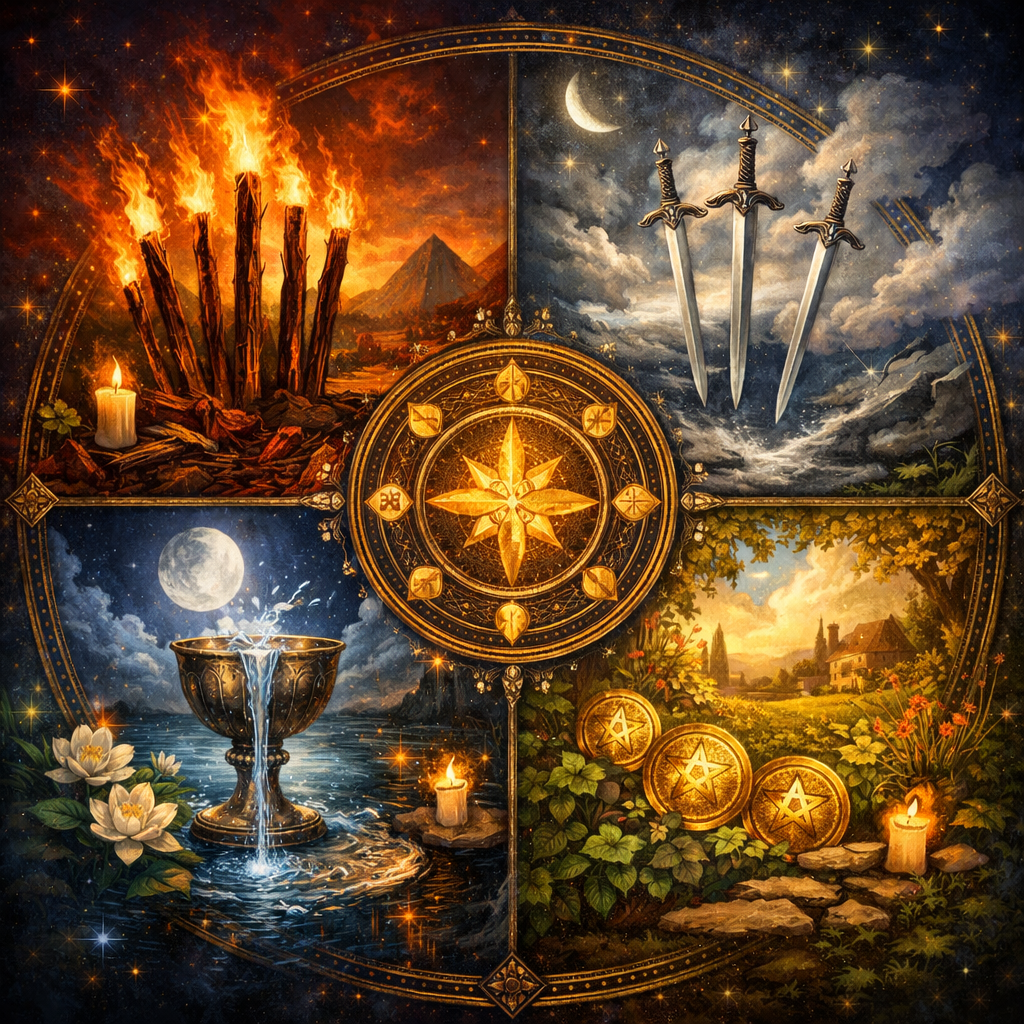
The four suits correspond, in most modern tarot traditions, to the four classical elements:
- Wands — Fire
- Cups — Water
- Swords — Air
- Pentacles — Earth
This elemental structure is one reason tarot feels so enduring. It is not only a card system. It is a symbolic ecology. Fire, water, air, and earth are among humanity’s oldest ways of describing reality. They appear in philosophy, medicine, mythology, ritual, literature, and religious imagination across cultures.
In tarot, they appear again—not as abstract concepts, but as living patterns within human experience: action, emotion, thought, and material life.
To understand the suits is to recognize that tarot does not only ask, “What will happen?” It asks something deeper:
What kind of energy is present here?
What element is shaping the story?
The Suits as the Four Languages of Experience
Each tarot suit represents more than a topic. Each is a way of perceiving and responding to life.
Fire speaks through desire, courage, momentum, and the impulse to create.
Water speaks through emotion, intuition, memory, and relationship.
Air speaks through ideas, language, analysis, and tension.
Earth speaks through labor, health, resources, and what can be built and sustained.
When we read tarot, we are often reading the interplay of these four forces. A spread heavy in Cups may reveal emotional saturation or relational depth. A spread dominated by Swords may suggest mental pressure, conflict, or painful clarity. Pentacles may ground the question in practical reality. Wands may set the entire situation into motion.
For writers, these same forces shape stories. A narrative rarely unfolds through action alone, or emotion alone. Characters act, feel, think, and build consequences through the material world. The four suits mirror this balance perfectly.
This is part of tarot’s quiet genius. It recognizes that human life—and human storytelling—always unfolds through energy, emotion, thought, and form.
Wands: The Suit of Fire
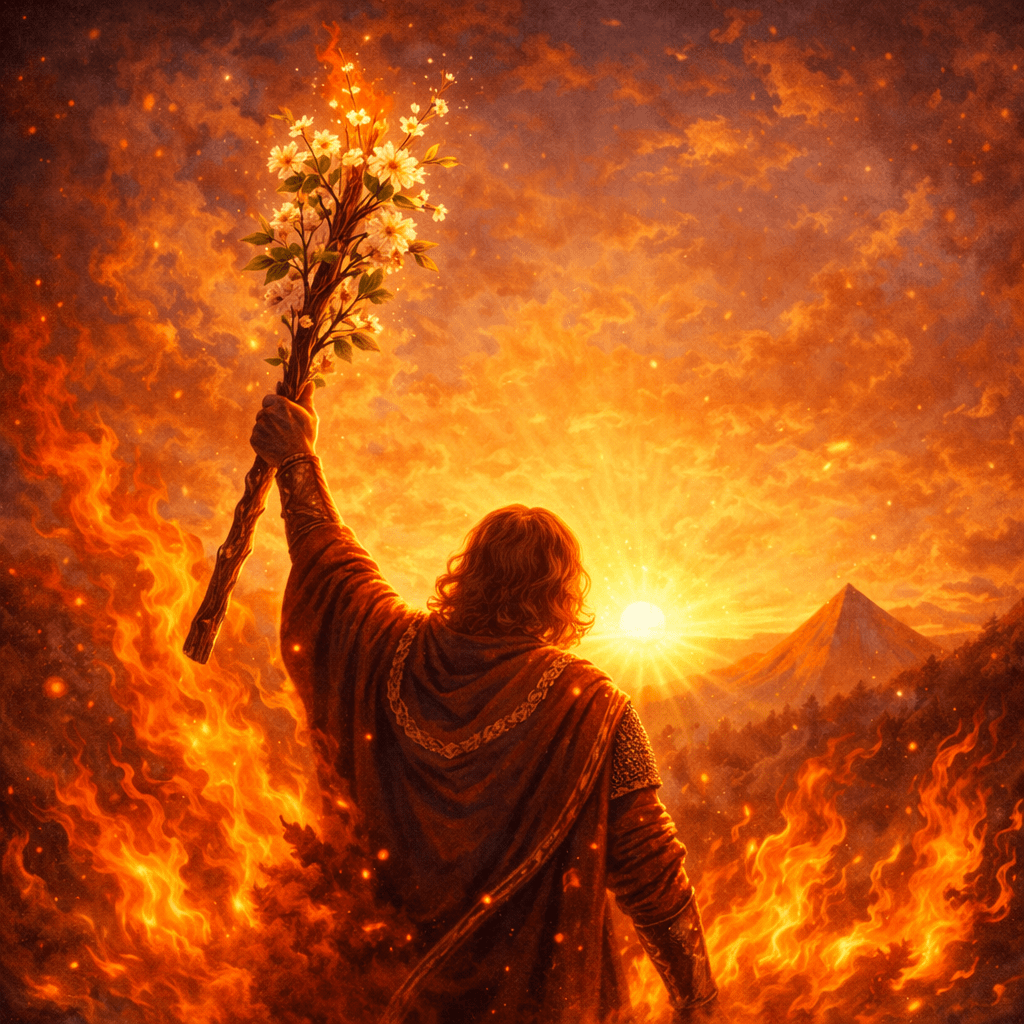
Fire is the element of animation. It warms, transforms, destroys, illuminates, and inspires. In tarot, Fire appears through the suit of Wands, which governs passion, initiative, ambition, risk, charisma, creativity, and personal drive.
Wands are the spark before the structure. They are the sudden “yes,” the leap toward possibility, the sacred restlessness that refuses stagnation. When Wands appear strongly in a reading, something wants movement. Something is ready to begin.
This is why the Wands often feel heroic. Their symbolism carries the energy of quests, vision, daring, and identity forged through action. Fire is the element of becoming visible. It wants expression. It wants to be seen in the world.
Yet Fire is never innocent. Myth reminds us of this again and again. Fire is Prometheus stealing divine power. Fire is the forge where weapons and tools are made. Fire is the torch that guides—and the blaze that consumes.
In its brightest form, the suit of Wands symbolizes inspiration and courage. In its shadow, it can suggest impulsiveness, arrogance, burnout, or action without reflection.
The Wands ask: What enlivens you? What are you willing to pursue? What dream is asking for fuel?
In storytelling terms, Wands often appear at the beginning of the journey. They are the call to adventure, the moment a character decides to act, the spark that sets a narrative into motion.
To live in Wands is to live close to desire—not shallow craving, but the deeper fire of purpose and creative force.
Cups: The Suit of Water
If Wands ignite, Cups flow.
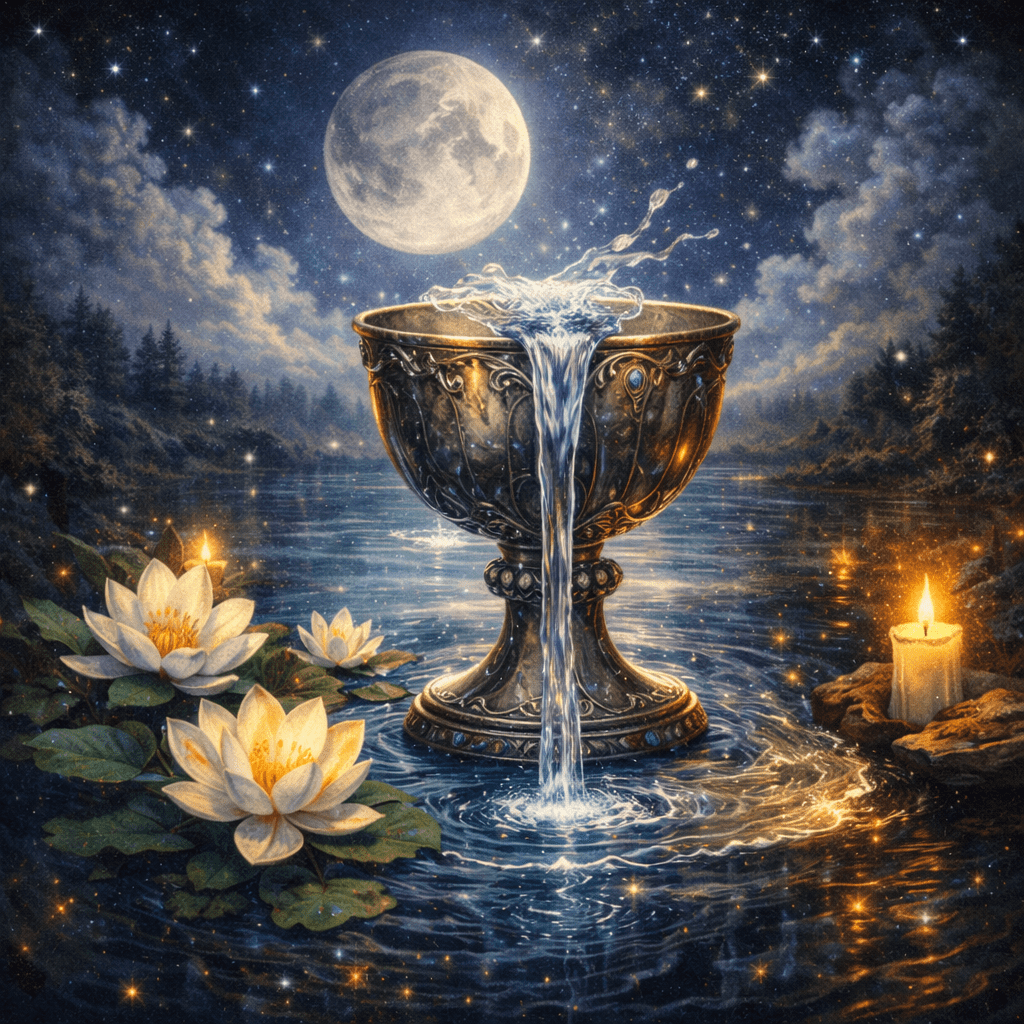
Water is the element of emotion, intuition, dreams, vulnerability, receptivity, and relational depth. In tarot, the suit of Cups governs the inner tides of the heart.
This is the realm of love, grief, longing, imagination, spiritual sensitivity, memory, and emotional truth.
Cups remind us that not everything meaningful can be forced into language. Some things are known through feeling first. Some truths arrive as atmosphere before they ever arrive as explanation.
Because of this, Cups are deeply associated with symbolic life. Water is the element of reflection—not only in the literal sense, but in the emotional and psychological sense as well. It mirrors, distorts, reveals, and conceals.
In myth, water is ancient. It is birth and dissolution, blessing and danger. It is the river crossed at the edge of death, the sea from which beauty rises, the well of prophecy, the flood that overwhelms certainty.
Cups carry this symbolic inheritance.
In tarot readings, Cups often reveal the emotional truth beneath a situation. They ask what the heart is experiencing beneath the surface.
In storytelling, Cups belong to the emotional core of a narrative—the longing that motivates a character, the grief that reshapes them, the love that changes the direction of a life.
To live in Cups is to accept that the heart has its own intelligence, and that symbolic truth often arrives wearing the clothes of emotion.
Swords: The Suit of Air
Air is invisible, but never absent. It moves through breath, speech, thought, argument, perception, and abstraction. In tarot, Air appears through the suit of Swords.
Swords govern intellect, language, logic, conflict, discernment, strategy, truth, and mental tension.
Because many Sword cards involve struggle or confrontation, readers sometimes view this suit as inherently negative. But that misses something essential: Air is not cruel by nature—it clarifies.
The Sword cuts, but it also distinguishes one thing from another. It separates confusion from precision. It asks what is true, what is assumed, and what remains unspoken.
Human beings live inside language and story. We form beliefs, defend identities, make arguments, and shape our world through interpretation. The Swords reveal how the mind can liberate or imprison.
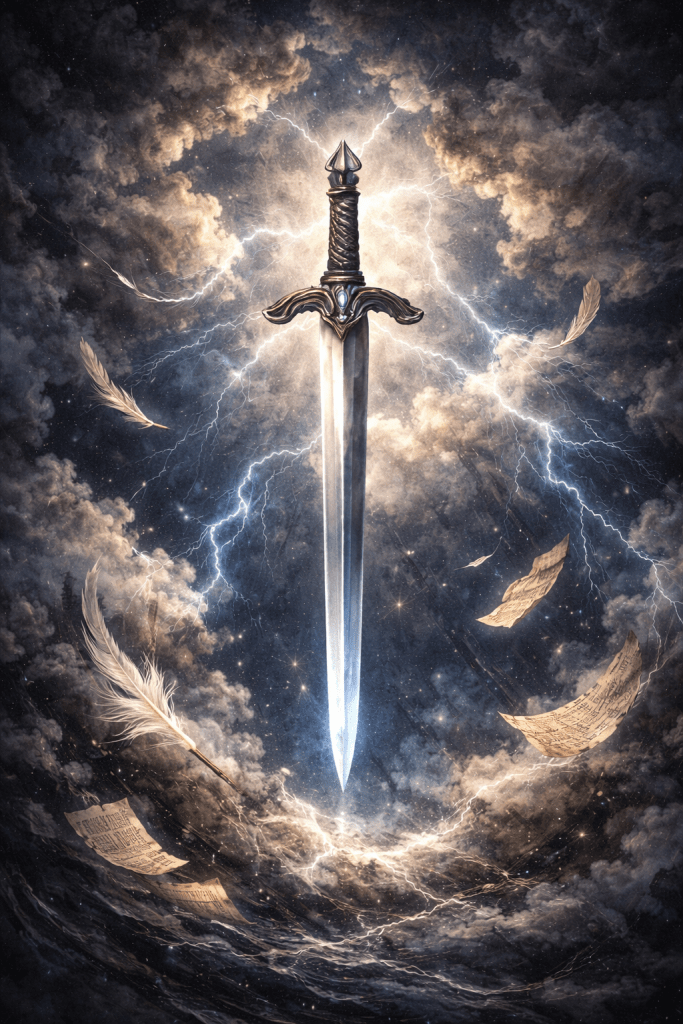
In tarot readings, Swords often appear when difficult truths must be confronted.
In storytelling, they represent moments of conflict, revelation, betrayal, realization, and decision—the turning points where illusion breaks and the narrative changes direction.
To live in Swords is to live in the tension between truth and interpretation.
Pentacles: The Suit of Earth
Earth is the element of material reality. It is the body, the field, the table, the home, the coin, the seed, the tool, the season, and the harvest.
In tarot, Earth appears through the suit of Pentacles, which governs work, health, resources, stability, craftsmanship, and manifestation.
Pentacles are often described as the practical suit—true, but incomplete. Earth is not merely mundane. It is sacred in its own way. It is the mystery of incarnation itself: spirit becoming form.
The Pentacles remind us that vision must eventually meet reality. Fire begins the journey, but Earth builds the house.
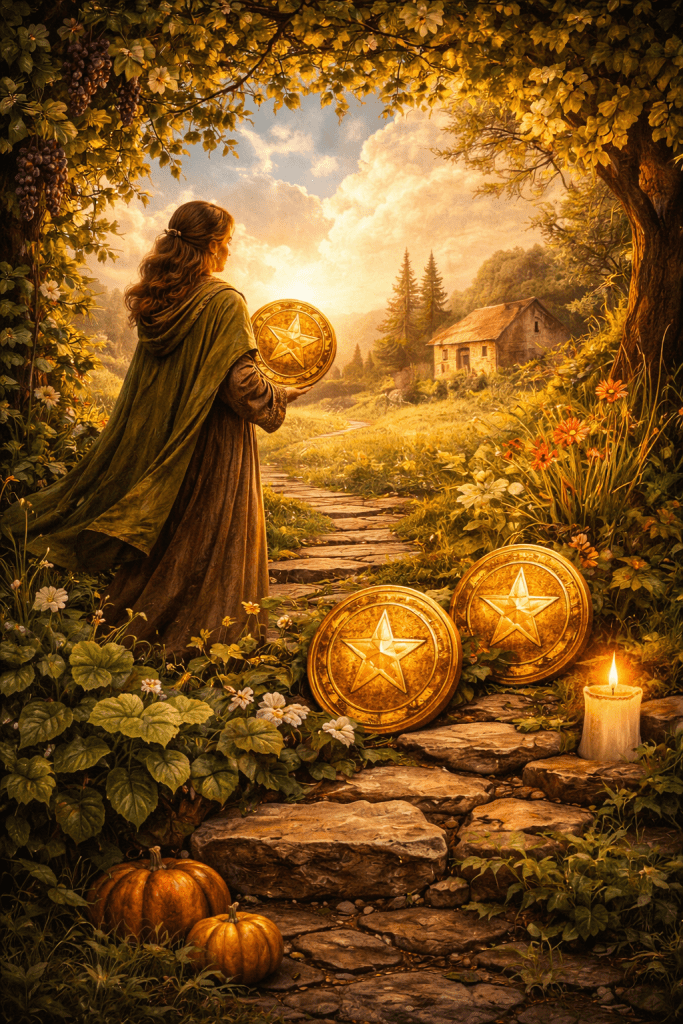
In tarot readings, Pentacles reveal the tangible dimensions of life: work, resources, health, and long-term stability.
In storytelling, they represent consequences and embodiment—the physical world where decisions take shape and where dreams must become something real.
To live in Pentacles is to remember that meaning is not only imagined. It is practiced.
The Four Suits Together: A Map of Wholeness
Each suit represents a different dimension of human experience, but none is complete alone.
Fire without Water becomes reckless.
Water without Air becomes shapeless.
Air without Earth becomes detached.
Earth without Fire becomes stagnant.
For tarot readers, this balance reveals the energetic patterns present within a spread.
For writers, it reveals something equally powerful: the structure of human narrative itself. Characters act, feel, think, and build consequences through the world around them.
When these forces fall out of balance, stories—and lives—begin to fracture.
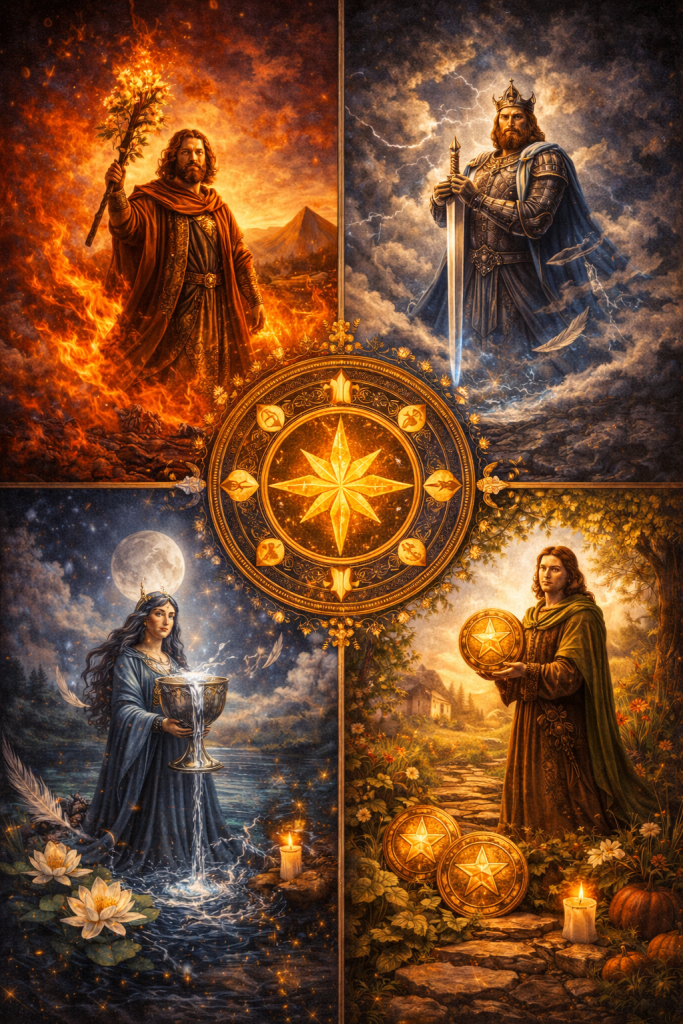
Seen this way, the tarot deck becomes more than a divinatory tool. It becomes a symbolic anatomy of experience.
The Suits as a Symbolic Life Compass
The four suits endure because they mirror a reality older than tarot itself. Human beings act. Human beings feel. Human beings think. Human beings build.
Fire, Water, Air, and Earth describe the recurring patterns through which both life and story unfold.
Tarot does not invent these forces. It simply gives them images.
Wands show how desire moves.
Cups reveal how the heart remembers.
Swords illuminate how the mind divides and discovers truth.
Pentacles show how meaning becomes matter.
And perhaps that is why these symbols continue to speak so clearly.
They do not belong only to the cards.
They belong to us.
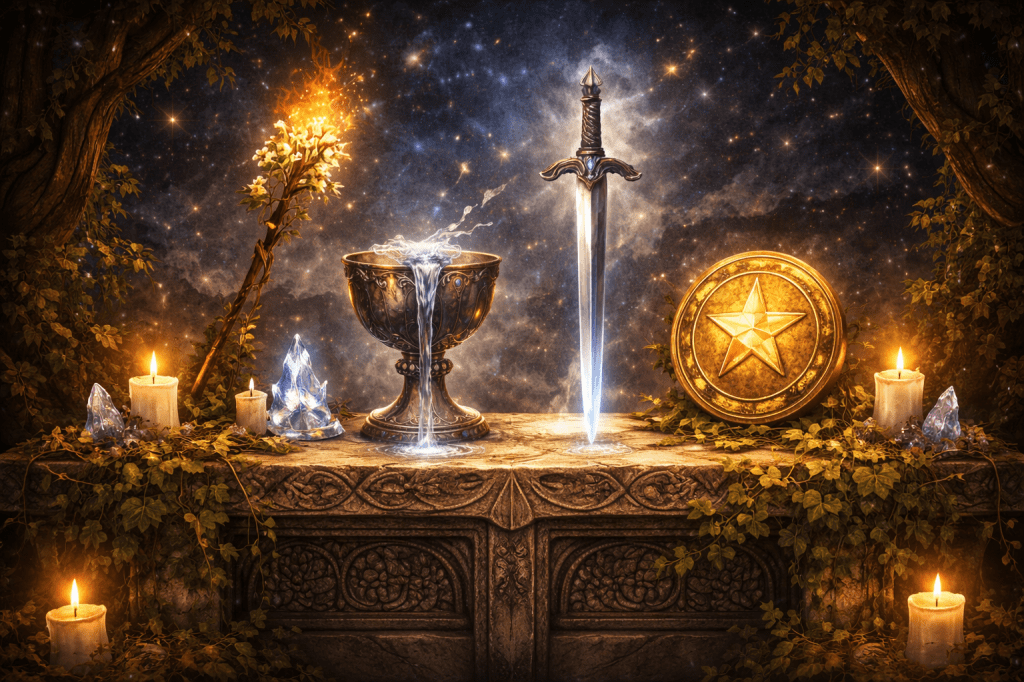
The tarot suits are not merely parts of a deck.
They are four doors into the architecture of being.
If the four suits represent four forces within human experience—action, emotion, thought, and material life—then an interesting question emerges:
Which element feels strongest in your life right now?
Are you living in the fire of ambition, the waters of emotion, the winds of thought, or the grounded work of earth?
Tarot often reveals that our lives move through these forces in shifting cycles. Recognizing which element is most present can be the first step toward understanding the story we are currently living.
 Ink & Oracle
Leave a comment