
Gratitude is a concept we all recognize, but have you ever stopped to consider the origins of the word itself? This simple expression of thankfulness has a rich history that spans centuries, and its evolution offers fascinating insights into how humans have understood and expressed appreciation throughout time.
The Latin Roots: Gratus and Gratitudo
The journey of the word “gratitude” starts in ancient Latin. The root of the word is “gratus,” meaning “pleasing” or “thankful.” In Roman culture, this word was often used to describe the state of being pleased or appreciative. Over time, the term evolved into “gratitudo,” which referred specifically to the feeling or expression of thankfulness.
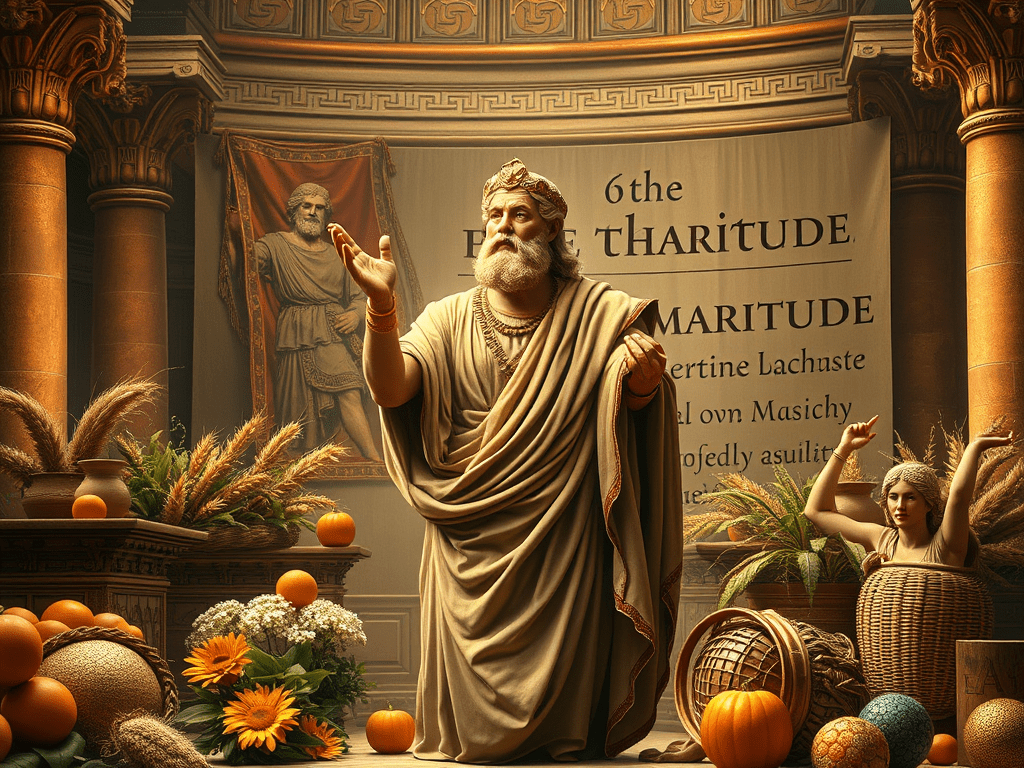
In the context of ancient Roman society, gratitude was not just a fleeting emotion but a serious, almost sacred, practice. It was often associated with religious rituals, where individuals expressed thanks to gods for blessings such as bountiful harvests or victories in battle. The notion of gratitude, therefore, wasn’t just social—it was tied to the divine and spiritual realms.
From Latin to Old French
As the Roman Empire expanded, the Latin language spread across Europe. With the fall of the empire, Latin continued to evolve into the languages of the regions it had once ruled. By the 14th century, “gratitudo” had entered Old French as “gratitude,” retaining its core meaning of thankfulness.
The influence of Old French on English is well-known, as many Latin-based words made their way into the English language during the Middle Ages. It’s during this period that the word “gratitude” began to be used in English to express the act of being thankful or appreciative.
The Evolution in English
The English word “gratitude” appears in texts as early as the 16th century. In literature from this period, gratitude is often depicted as a more formal or respectful term. For example, in Shakespeare’s The Taming of the Shrew, the character Petruchio describes gratitude as “a kind of wind,” reflecting its subtle, yet powerful nature.
As the centuries went on, the meaning of “gratitude” remained largely unchanged, though its usage expanded. By the 18th and 19th centuries, gratitude had become more commonly used in both everyday conversation and in written works. The Enlightenment era, with its focus on reason and human emotion, gave way to new reflections on the role of gratitude in personal relationships and society at large.
Gratitude Today: A Word with Deep Roots
Despite the passage of time, the word “gratitude” has remained remarkably stable in its meaning. Today, it’s used universally to express appreciation for anything from acts of kindness to the larger blessings of life. Though the word itself has stayed the same, the way we practice gratitude has evolved. What once was a deeply religious or formal concept has become something accessible and essential to modern life.
Conclusion
From its ancient Roman origins to its place in modern English, the word “gratitude” has carried the same core meaning: an acknowledgment of thankfulness. Though the expression of gratitude has changed over time—from formal religious ceremonies to daily affirmations—the word remains a powerful tool for connection, both with others and within ourselves.
Next time you say “thank you,” remember that you’re participating in a tradition that spans thousands of years, rooted in the very word that continues to shape how we express our appreciation for the world around us.
 Ink & Oracle
Leave a comment