
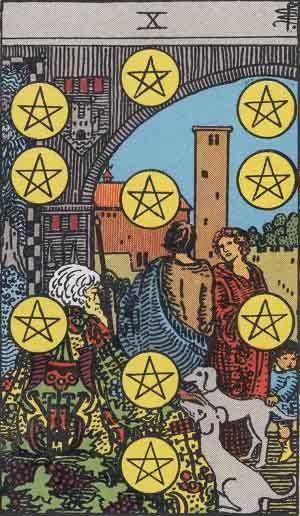
Pamela Coleman Smith, 1909.
Courtesy Holly Voley
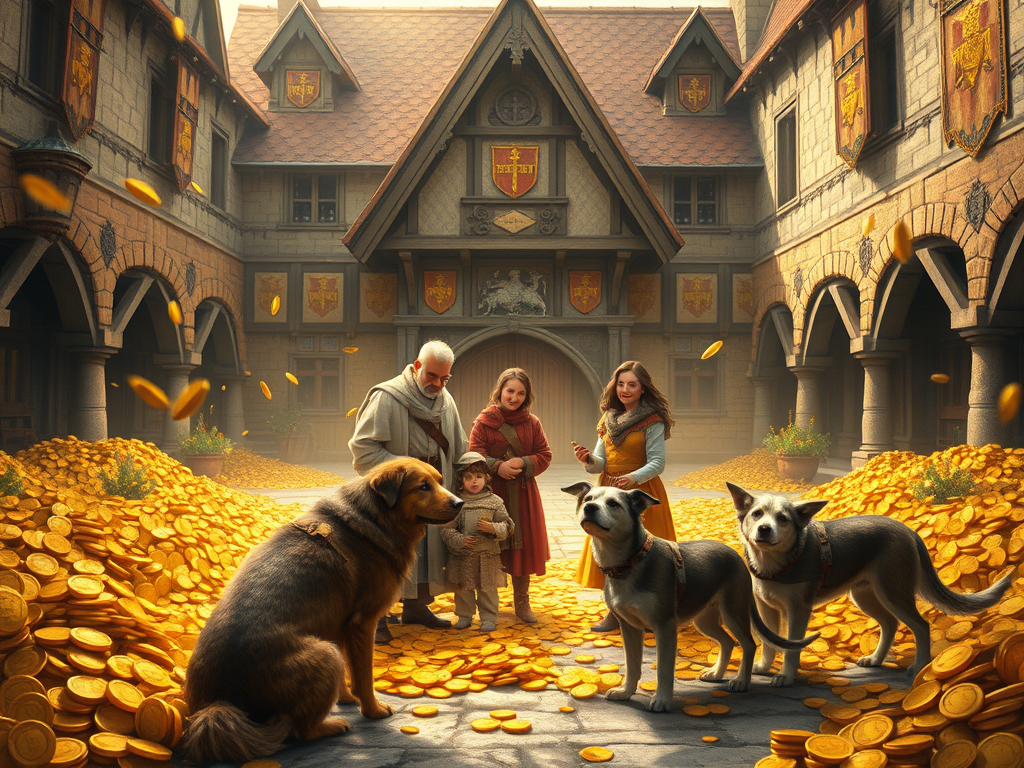
Golden coins cascade around a medieval courtyard where three generations gather – grandfather, parents, and children. Two faithful dogs guard the scene. The walls of their home stand strong, suggesting security and permanence. In the Rider-Waite deck, the intricate architecture and heraldic symbols hint at established traditions and family pride.
This card speaks of material success, but goes deeper than mere wealth. It represents family businesses, inheritances, and the foundations we build for future generations. The number ten signifies completion – the final manifestation of worldly success. Yet it also warns of potential stagnation if we become too fixed in our ways.
For writers, the Ten of Coins offers rich narrative possibilities. It invites stories about:
- Old money versus new wealth
- Family secrets hidden in inherited property
- The burden of maintaining dynasty
- Conflicts between tradition and progress
- The true meaning of lasting success
Story Seed:
Maria stands in her grandmother’s kitchen, running her fingers over the scratched countertop. The old recipe box sits before her, stuffed with hand-written cards spanning three generations. Inside, she finds more than instructions – there are secret notes, family jokes, and her mother’s teenage doodles. Each recipe carries a story, a piece of family wisdom. She realizes this inheritance matters more than the house itself.
Write With Me:
How would inherited wealth or knowledge change your character’s life? Share a scene where your protagonist discovers a family secret hidden in an everyday object. Post your flash fiction in the comments below!
Keywords: inheritance, legacy, tradition, abundance, family
 Ink & Oracle
Leave a comment