

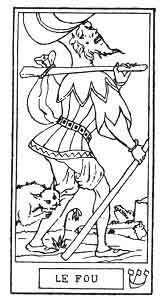
Oswald Wirth
From Tarot of the Bohemians, 1896.
The Fool is one of the most iconic cards in the tarot deck, often pictured as a carefree traveler on the brink of an adventure. But this lighthearted, youthful figure wasn’t always seen this way. Once depicted as a ragged madman, the Fool’s journey from chaos to innocence mirrors humanity’s evolving understanding of freedom, risk, and self-discovery.
Let’s explore the fascinating evolution of the Fool card, tracing its history, symbolism, and cultural significance. Along the way, consider how you’ve encountered this card in readings or life, and how its message resonates with your own path.
The Origins of the Fool: Chaos and Madness
The earliest depictions of the Fool, dating back to the 15th century, showed a disheveled figure dressed in rags, sometimes with exposed skin or genitals. Known as il Matto (Italian for “the Madman”), this character symbolized societal rejection and disorder.
- A Wild Card: In early tarot games, the Fool was not part of the trump sequence. Instead, it served as a wild card, representing unpredictability and chaos. This role reflected the Fool’s symbolic outsider status—a figure unbound by rules and norms.
- Visual Imagery: Historical depictions often showed the Fool with a club or staff, his belongings in tatters. These crude visuals emphasized themes of foolishness, indecency, and rebellion.
This portrayal mirrored medieval society’s fear of disorder and those who lived outside conventional expectations. However, seeds of transformation lay within this interpretation, as the Fool began to be seen as more than just a disruptive force.
Reflect: How do you interpret chaos in your own life? Do you see it as a destructive force or a chance for growth?
The Fool’s Journey: A Shift Toward Wisdom
Over time, the Fool transitioned from a disruptive outsider to a figure representing wisdom and potential. This shift began during the Renaissance and continued with the rise of tarot’s spiritual interpretations in the 18th and 19th centuries.
Renaissance Humanism
The Renaissance brought a cultural emphasis on individual potential, curiosity, and the exploration of new ideas. This shift influenced how the Fool was perceived:
- From Outcast to Observer: The Fool began to be seen as someone who existed outside societal norms, not to disrupt but to observe and understand them. As an outsider, the Fool could see truths hidden from those bound by convention.
- Symbol of Growth: The Fool’s willingness to embrace uncertainty began to symbolize personal growth and the human capacity for learning through experience.
Esoteric Interpretations
The rise of esoteric tarot in the 18th century further reshaped the Fool. Occultists saw the Fool as the starting point of a mystical journey:
- The Fool’s Journey: In this framework, the Fool represents the seeker embarking on a spiritual path, navigating the challenges and lessons of life.
- A Symbol of Potential: Rather than being bound by chaos, the Fool became a figure of infinite potential, embodying the courage to step into the unknown.
The Modern Fool: Innocence and New Beginnings
Today, the Fool is often depicted as a carefree traveler, standing on the edge of a cliff with a knapsack and a loyal dog by their side. This image has become a symbol of new beginnings, innocence, and spontaneity.
Visual Elements
Modern tarot decks, such as the Rider-Waite deck, emphasize themes of adventure and potential:
- The Cliff: Represents the risk of stepping into the unknown, a metaphor for life’s leaps of faith.
- The Dog: A symbol of loyalty, instinct, and protection, reminding the Fool that they are not alone.
- The Knapsack: Contains the tools and knowledge the Fool has accumulated, showing they are more prepared than they may appear.
Cultural Resonance
The Fool’s current interpretation aligns with broader cultural shifts toward self-discovery and personal growth. In an era focused on individuality and mindfulness, the Fool resonates as a reminder to embrace life’s journey with an open heart.
Prompt: When have you taken a leap of faith in your life? What did the experience teach you about trust and new beginnings?
Visualizing the Fool: Artistic Interpretations
The Fool’s depiction varies across tarot decks, reflecting the artistic and cultural influences of their creators. Consider these examples:
- Rider-Waite Deck: The classic image of the carefree traveler on the cliff, embodying optimism and risk.
- Thoth Deck (Aleister Crowley): A surreal and mystical interpretation, with vibrant colors and abstract symbolism.
- Modern Decks: Contemporary artists often reimagine the Fool with diverse representations, such as gender-neutral figures or futuristic settings.
Including images of these interpretations can enhance your understanding of the Fool’s evolving symbolism.
Lessons from the Fool
The Fool’s evolution, from a symbol of madness to one of innocence and potential, mirrors humanity’s changing perspectives on life’s challenges. Key takeaways include:
- Embrace Uncertainty: The Fool reminds us that uncertainty is not to be feared but embraced as a natural part of growth.
- Trust the Journey: Like the Fool stepping off the cliff, trust that life will catch you when you leap.
- Stay Curious: The Fool’s openness to new experiences encourages us to approach life with curiosity and wonder.
Ask Yourself: What does the Fool symbolize in your own life? How can you embody their spirit of openness and courage?
Conclusion
The Fool’s transformation from madman to innocent traveler is a testament to the enduring power of symbols to evolve with culture and time. Whether you see the Fool as a representation of chaos, a seeker of truth, or an emblem of new beginnings, their journey offers valuable lessons for navigating life’s uncertainties.
Next time you encounter the Fool in a tarot reading, reflect on its rich history and consider how its message applies to your own journey. What risks are you willing to take? What adventures await when you step into the unknown?
References
- “The Fool (Tarot Card)” – Wikipedia
- “The Fool’s Journey” – Medium
- “Unraveling The Fool’s Meaning” – HowStuffWorks
- “What Kind of Fool Am I?” – Ayin Press
- “Anatomy of a Card: The Many Faces of the Fool” – Liminal 11
This revised blog post features consistent citation formatting, personal insights, reader engagement prompts, and clear subheadings to improve readability. Let me know if you’d like further adjustments or additional visuals!
 Ink & Oracle
Leave a comment